
The five-year strategy builds on more than three decades of community-based natural resource management, placing ecosystem restoration, resilient livelihoods and strengthened local governance at the centre of SAFIRE’s next chapter.
Harare, Zimbabwe — 3 September 2026
The Southern Alliance for Indigenous Resources (SAFIRE) has officially launched its 2026–2030 Strategic Plan, setting out a five-year roadmap to strengthen ecosystem restoration, sustainable livelihoods, climate resilience and community-based natural resource governance across Zimbabwe.
Launched in Harare under the theme “Thriving Ecosystems, Resilient Communities,” the new strategy builds on more than three decades of SAFIRE’s work with communities to restore natural resources while creating sustainable livelihood opportunities.
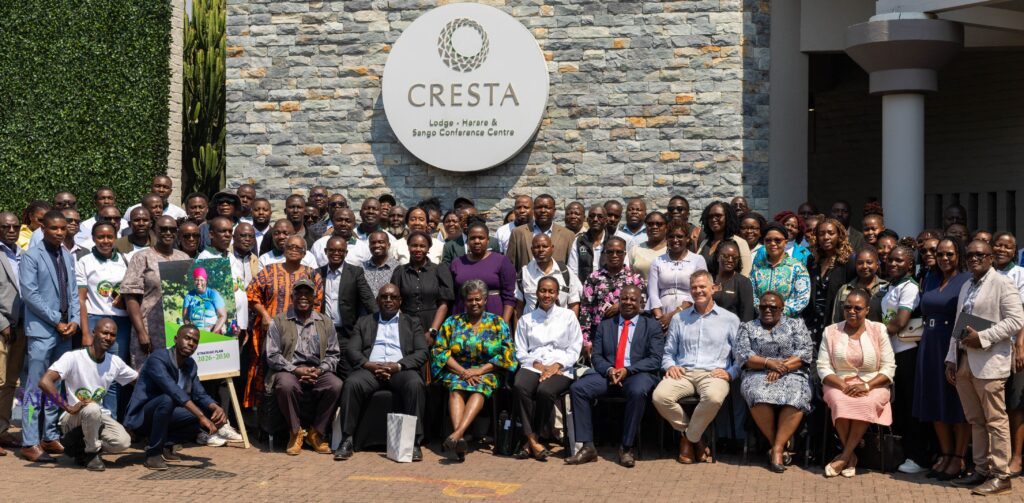
The launch brought together government representatives, development partners, civil society organisations, local authorities, community representatives and other stakeholders to reflect on SAFIRE’s journey and discuss its vision for the next five years.
One of the highlights of the launch was a reflection on SAFIRE’s history and evolution, including remarks from SAFIRE founder Gus Le Breton, who reflected on the organisation’s origins and the principles that shaped its approach to community-based natural resource management.
The programme also featured a conversation bringing together current and former SAFIRE leadership, a former employee Ms Beauty Jiji and Chiredzi rural district Executive Officer for Environment, Agriculture, and Tourism Mr Chenjerai Zanamwe , reflecting on the organisation’s history, community impact and vision for 2026–2030.
This created an important link between SAFIRE’s past and its future: a recognition of the organisation’s three-decade journey while looking ahead to the scale and ambition required to respond to Zimbabwe’s changing environmental and socio-economic landscape.
At the heart of the new Strategic Plan is SAFIRE’s belief that thriving ecosystems and resilient communities are interconnected.
The strategy seeks to strengthen the relationship between ecosystem restoration, sustainable livelihoods and natural resource governance, recognising that communities living closest to natural resources have a critical role to play in protecting and restoring them.
By 2030, SAFIRE aims to:
- Restore at least 50,000 hectares of degraded land;
- Engage up to 90,000 community members in restoration activities;
- Facilitate 20 community nature-based enterprises;
- Build entrepreneurial capacity among 1,000 community members, with a focus on women and youth;
- Strengthen natural resource governance across
- Protect at least 45 wetlands; and
- Establish more than 1,000 hectares under farmer-managed natural regeneration.
The launch also provided an opportunity to demonstrate how the Strategic Plan will translate into practical action.
Through interactive exhibition stations, participants engaged with SAFIRE’s work across ecosystem restoration, livelihoods and non-timber forest products, and natural resource governance.
These areas reflect SAFIRE’s integrated approach to development, where restoration is linked to livelihood opportunities, community institutions and long-term resilience.
A defining feature of the launch was the inclusion of community representatives alongside institutional and development-sector stakeholders.
Their participation reinforced a central principle of our approach that communities are not simply beneficiaries of conservation and development programmes but they are partners and custodians of the ecosystems on which their livelihoods depend.
The launch therefore provided a platform for community voices to contribute to the conversation about what resilience and thriving ecosystems should look like at local level.
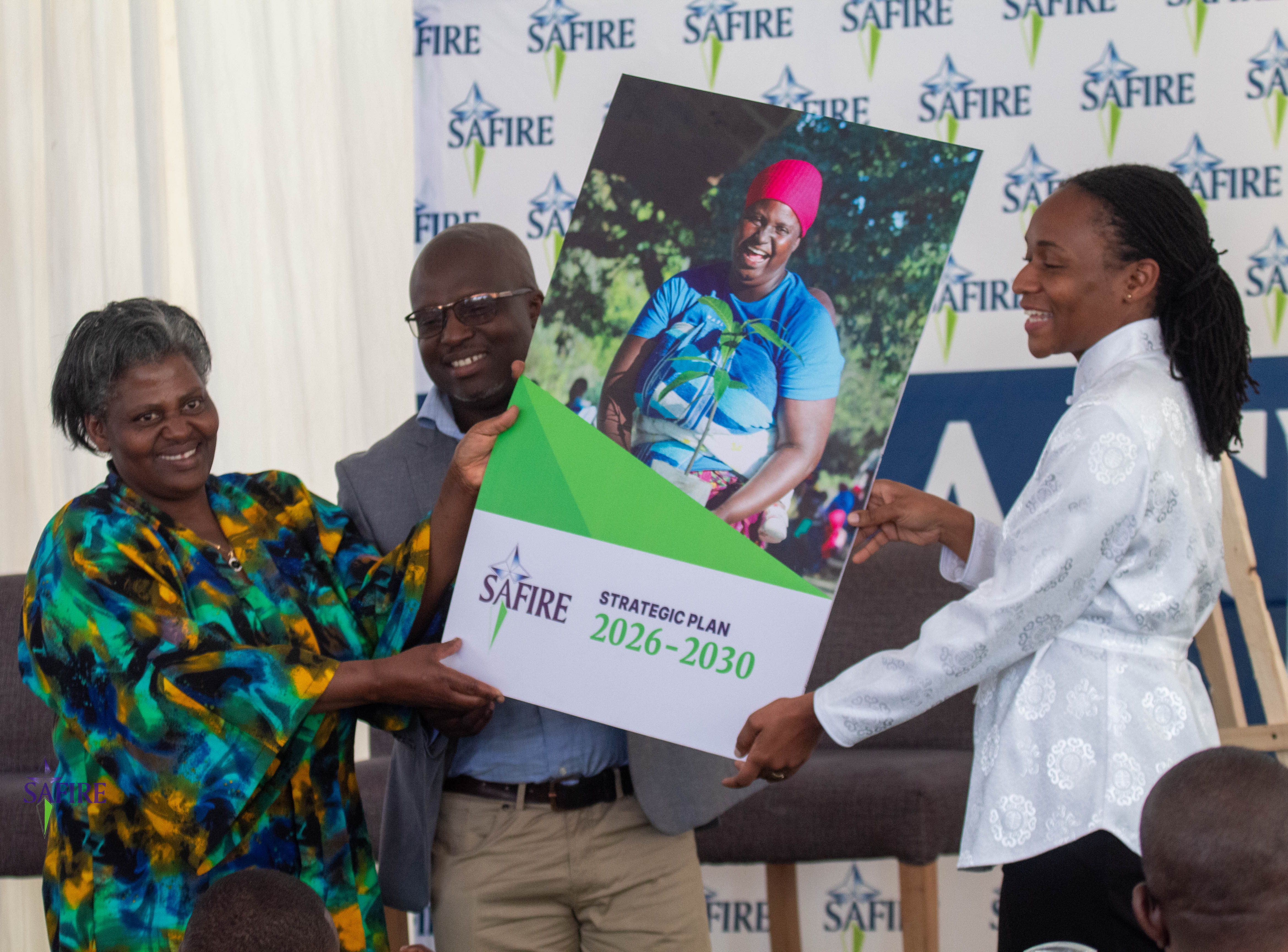
The official presentation of the SAFIRE 2026–2030 Strategic Plan, followed by the formal ribbon-cutting ceremony, marked the beginning of a new chapter for the organisation.
The strategy represents an opportunity to consolidate lessons from more than 30 years of community-based natural resource management, strengthen existing systems and partnerships, and scale approaches that have demonstrated potential to improve both ecosystem health and community livelihoods.
“Thriving Ecosystems, Resilient Communities” is therefore more than the theme of the launch. It is the ambition guiding SAFIRE’s work towards 2030.
Explore the SAFIRE 2026–2030 Strategic Plan. Discover SAFIRE’s priorities, ambitions and commitments for building thriving ecosystems and resilient communities over the next five years. [DOWNLOAD THE STRATEGIC PLAN]